

Create an AI version of yourself, with your consent on record.

One photo, one short recording, and you can be on camera without filming.
Already have an account? Sign in
Free to start · No credit card
Create an AI version of yourself, with your consent on record.
Give us one clear photo and about fifteen seconds of you saying yes on camera. We check the face matches, save the consent, and build a Digital Twin you can speak through any time. Nothing renders until that consent is current.
Your twin starts from a photo and a recorded consent. You can record both here, or upload footage of yourself, but it has to be you on camera.
Part of AI video generator.
What does it mean to create an AI version of yourself?
It means building a Digital Twin: a saved version of your face that speaks a script you type. You give a photo, a recorded consent and a name, then pick a voice. After that you write, and your twin says it. It is you on screen, and the permission is on file.
Who it is for
Anyone who has to be on camera regularly and cannot film every time. You have to be the person in the photo, or hold that person's own recorded consent.
What you need
One clear photo of your face looking at the lens. About fifteen seconds of you on camera saying yes and reading a short code, or footage of yourself you already have. A voice, and a name for the twin.
What it costs
The Free plan includes one Starter Twin for your Workspace, for life, and 8,400 credits once. Full-length videos in your own twin start on the Plus plan, at $49 a month billed yearly, or $59 month to month. Plus includes 28,000 credits a month, about three minutes of video at our default quality.
What it does not do
It cannot copy a face whose consent you do not hold. A clip you upload from your library was not recorded against today's safety code. And it stops rendering when the consent runs out after a year.
Three things, and that is the whole ceremony.
A clear photo of your face, looking straight at the lens. A short recording, about fifteen seconds, where you say on camera that you agree and read a code we put on the screen. And a name for the twin.
The photo becomes your twin's face. The recording does two jobs: it is the consent record, and it is also how we read the way you move. When you record it here we put a code on the screen and listen for it, which ties the yes to today.
If you would rather not record on the spot, upload footage of yourself instead. One file does both jobs. We take the face from it and keep the clip as the consent record, held to the same fifteen to ninety seconds. It came from your library, so it was filmed before we picked a code, and the spoken check has nothing to listen for. Everything else runs the same way.
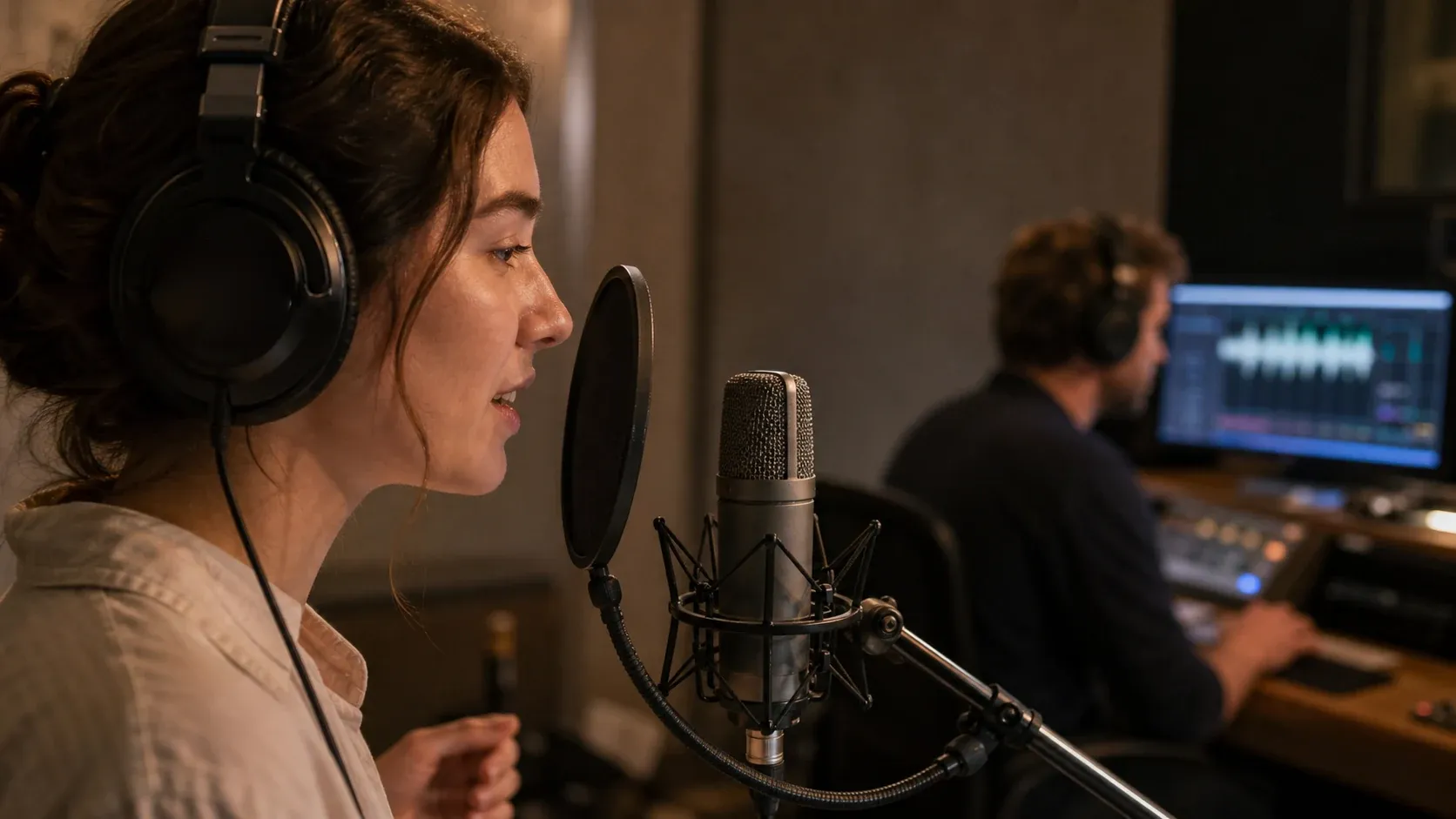
Nothing is charged for recording it. You can re-record as many times as you like before you keep one, and a take can run up to ninety seconds if you want to say more than the words we suggest.
Three steps, and the recording is about fifteen seconds.
- 1
Take the photo.
The camera opens with an outline to sit inside, one line of direction, and a three count so you are not caught mid blink. Retake it as often as you like. No camera on this machine? Upload a photo instead.
- 2
Say yes on camera.
About fifteen seconds. Read the code on the screen. Nothing is charged for this, and you can record it again any time.
- 3
Pick your look and your voice.
Choose how you want to appear, then pick a voice from our library. Full-length videos in your own twin start on the Plus plan. Cloning your own voice is on every plan, Free included. Cloning takes ten seconds of clear audio.

Once the twin is saved, you type and it talks.
Write the script, pick the voice, render. The same twin covers the weekly update, the lesson, the sales note and the thing you have been meaning to film since March. The formats, the lengths and the languages live on AI talking head generator, and your own voice comes from Voice cloning.
People are particular about how they look, so your twin does not decide for you.
Light tidy is the one that starts selected, and you get three sets of stills in the first run, so there is room to change your mind twice before you settle. Once the twin exists you have one more way to change how it looks: upload about a minute of footage of the consented person and it becomes a new Look you can render from, at no credit cost.
Keep my look
Your own hair and clothes, in a new room.
Light tidyStarts selected
Freshly combed hair, simple clean clothes.
Groomed
A fresh cut and a well-fitted shirt.
Styled looks
A new setting, with clothes to match.
We compare the face in the recording with the face in the photo.
If they do not look like the same person, we ask for the consent again rather than let it through. It is the safer mistake of the two.
We keep one encrypted face template for you, not a library of your pictures, and the readings taken for each check are thrown away as soon as the check finishes. The biometric notice spells out what is stored, for how long, and how it goes away.
We also listen for the code you read aloud. If we cannot hear it clearly we tell you and ask you to record that bit when you have a minute, so your twin stays verified.
This is an identity check that we run. It is not a certification, and we do not claim one.
Your face is yours, including the part where you take it back.
The photo and the recording sit in your Workspace, not on a public link. We do not use your photos, voice, scripts or finished media to train a Kyndrify model.
Delete the twin whenever you like. Deleted Digital Twin data can stay recoverable for up to 30 days, and is then hard-deleted. The consent evidence itself is kept longer, on the schedule set out in the Terms and the biometric notice, because it is the record that proves the person agreed. That part is on purpose. A consent record you can erase is not much of a record.
Consent also runs out on its own after a year. When it does, the twin stops rendering until you record it again. Nobody has to remember to revisit a decision they made a year ago.
You cannot say yes on another person's behalf.
Getting their consent works two ways. Sit with them, record it, and upload it when you build the twin. Or send them a private link and they record it themselves, on their own phone, in their own words. Either way it has to be them on camera, and either way they can take it back.
Somebody who consents through the link can withdraw it at any time from a link in their confirmation email, and once they do, no new videos of them can be made. That is the whole point of a link rather than a checkbox.
The consent record stays between the subject and your agency. We are the infrastructure, and we hold the evidence that the person agreed.
Two different things, and most people want the first.
A Digital Twin is a real person. Yours. It needs a photo of that person, a recorded consent, and a face that matches. The consent is dated and it runs out after a year.
An Avatar is a character we made. There is no real person behind it, so there is no consent to collect and nothing to withdraw. It is the quicker answer when the face does not need to belong to anyone.
If you came here looking for a digital twin of a factory floor or a jet engine, that is a different field and this is not it. We use the phrase for a person.
What this does not do.
A clip from your own library carries no safety code
You can upload footage of yourself instead of recording on the spot, and one file supplies both the photo and the consent. It was filmed before we picked a code, so the spoken check has nothing to listen for. The take you record here is the stronger record, because it ties the yes to today.
On the Free plan the first run ends on a sample
The first run finishes with a four second sample of your twin speaking, so you see yourself before you decide anything. Full-length videos in your own twin start on the Plus plan.
You cannot give consent on somebody else's behalf
A twin of another person needs their own recorded consent, and the person on camera has to be them. You can capture it with them and upload it, or send them a link to record it themselves.
Questions people ask before they hand over a photo.
- Can I just upload a video of myself?
- Yes, if it is footage of you. One file covers both jobs. We take a frame from it for your twin's face, and the clip itself becomes the consent recording, held to the same fifteen to ninety seconds as a take you record here. Two things follow from that. Your footage was filmed before we picked a safety code, so there is no code in it and we do not listen for one. And that screen is only for footage of you: somebody else has to complete their own consent.
- What happens to the recording I make?
- It is stored as the consent record for your twin, in your Workspace. We read the face in it once, compare it with your photo, and keep one encrypted template. The readings taken for each check are not kept. We do not use it to train a Kyndrify model. The consent record itself is kept longer than the twin, on the schedule in the Terms and the biometric notice, because it is the evidence that you agreed.
- Can I make a twin of somebody else?
- Only with their own recorded consent, and there are two ways to get it. Capture it with them and upload it when you build the twin, or send them a private link and they record it themselves. Either way the person on camera has to be them, so you cannot give the consent on their behalf. Somebody who consents through the link can withdraw it later, and after that no new videos of them can be made.
- My face has changed. Do I need to start over?
- Usually not. You can swap the photo on an existing twin. The face check runs again on the new photo, and if it is clearly the same person, the consent you already gave carries over untouched. If it is not, we do not take the photo: we say it does not match the consented person and ask you to give consent again. Consent runs out after a year anyway, so most people record it again around then and the twin catches up with them.
- Can I delete it?
- Yes, whenever you like. Deleted Digital Twin data can stay recoverable for up to 30 days, and is then hard-deleted. The consent evidence stays on the retention schedule in the biometric notice, which is the one thing a deletion does not take with it.
- Does the Free plan let me make one?
- Yes. A Workspace on the Free plan gets one Starter Twin, once, for life. The first run ends with a short four second sample of your twin speaking, so you can see yourself before you decide anything. Full-length videos in your own twin start on the Plus plan.
The tools that do this
More on this from the blog
Be on camera without ever being on camera.
One photo, about fifteen seconds of you saying yes, and the consent on file. Start on the Free plan and see your own face say something you typed.